

Charlie Kaufman’s Antkind is an absurdist maximalist novel that makes his entire body of work feel like Neorealism in comparison. As a huge fan of his movies, I thought I knew what to expect from his debut novel, but he turns everything that I associate with his style—the sense of reality being a bit skewed, a deeply absurdist sense of humor, a melancholic protagonist who struggles to find happiness in a disappointing world—and ratchets it all up to levels that I didn’t think were possible. It’s like a pitch-perfect virtuoso performance that feels constantly on the verge of running out of steam but never does.
It begins with our protagonist, B., a middling film critic, going to St. Augustine, Florida, to do research on a little-seen movie at the fictional institution called The St. Augustine Society for the Preservation of St. Augustine Film History (SASFPSAFH) a large building, absurdly shaped like The Monster from the Black Lagoon. He is working on a piece called At Last, I Am Becoming: Gender and Transformation in American Cinema, and he is interested in a little-seen film called A Florida Enchantment from 1914, in which a magical seed can transform people from one gender to another.
B. rents an apartment and soon meets his neighbor, a black man who claims to be at least 119 years old and who has spent his entire life making a single stop-motion animated movie that has a runtime of 3 months. While B. is incredulous that the man is telling the truth, he agrees to watch it for exactly 3 minutes. After which, he will refuse to watch any more unless it intrigues him. And it does.
After watching it once, B feels as though he has witnessed the greatest movie ever made. He abandons the article that he went to Florida to pursue in order to take the film rolls (which fill an entire U-Haul truck) back to New York and study it, to bring it to the masses, and finally find true, meaningful success in the world of cinema. In B’s attempts to take the film to New York, he accidentally destroys the film reels, of which there are no copies. The rest of the novel is largely concerned with B. trying to remember every last detail of the 3-month long film, in order to recreate it, or to at least be able to write about it. He spends a lot of time seeing various hypnotists who claim to have the power to aid him in remembering each detail from a 3-month long movie.
What proceeds from there is an absurd tale about the power of art, about our desires to connect with one another, about our need to be seen, and it just happens to be one of the funniest novels I’ve read in many years. I spent the majority of my time reading it either laughing (something I rarely do with a novel) or simply in awe that Kaufman was able to keep raising the absurdity levels beyond any semblance of reality, while still somehow feeling grounded by the characters and the delightful writing.
B. is a marvelous character to follow. Obsessed with being “woke,” to the point of coming out the other side, he is a man who wants nothing more than to be seen as a good person, and respected as an intellectual. As a critic, he is pretentious and low-brow (his favorite filmmaker is Judd Apatow, and listening to him wax prosaically over his films, clearly talking about movies that don’t exist, is joyous). B. takes his role as a critic seriously, viewing each movie seven times (once to experience it emotionally {what he calls the “Nameless Ape” viewing, the second to understand why he had the emotional reaction that he did, the third to understand how the director achieved the emotional response that he did, step four is to watch it backwards, step five is upside down {because “we as Americans take gravity for granted….”}, the sixth viewing is conventional again so that he can “cement his reaction…and to establish the film’s ranking” on his many lists, and the seventh viewing is to not watch the film at all), and maintaining several ongoing lists whereby he ranks movies according to various criteria, much like many Letterboxd uses love to do.
Somewhere around the halfway point, the somewhat dream-like surreality of the novel shifts and leaves reality altogether. In a Kaufman film, reality can be bent in fascinating ways, but never broken. This book shatters it completely. Somewhere along the way, stuck between a memory of a movie, his dreams, desires, and sad little life collapse into one another. This is a novel where the past, present, and future seem to interact with memories of art, fantasies, and alternate possibilities, often at the same time. As a result, very little seems to matter—what happens in one scene will have little bearing on things that happen in another scene, to the point where you might be able to read large chunks of it out of order without losing much.
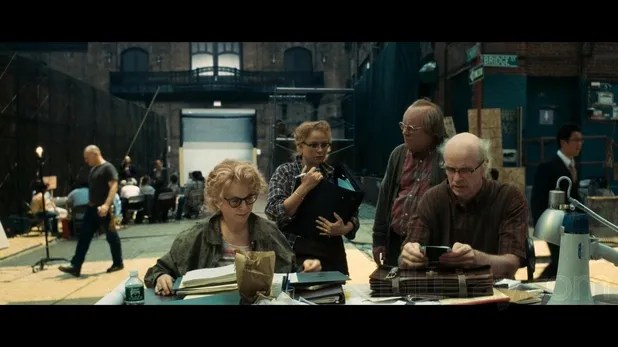
One of my favorite Kaufman movies is Synecdoche, New York, and that’s the movie that Antkind put into my mind the most. In it, a theater director feels his life unraveling, and his relationships deteriorating. After receiving a MacArthur Fellowship, he begins to pursue a theatrical production of his entire life. As it goes, he recreates every moment from his life using actors. He needs a larger and larger space to house all of the different actors playing out his life in different scenes that run simultaneously, including eventually auditioning actors to play himself auditioning actors to play himself in earlier scenes. The film becomes increasingly unwieldy, but it’s a beautiful representation of our multifaceted lives, how complex they are, how mundane they are, how messy they are. I’ve seen people criticize the film as being a sort of one trick pony, that it’s essentially the same concept repeated ad nauseum. This is a critique that I agree with, but I don’t find it to be a fault. As the same concept is repeated, it grows larger and more absurd, to the point of becoming a Magical Realist piece of Postmodern cinema. If a viewer finds the idea of a single idea playing out over an ever-increasing scale to the point of absurdity—and then continuing—to be uninviting, then Antkiknd will likely be grating at 700 pages.
Antkind’s increasing absurdities could very easily make the novel unreadable, and there were stretches at about the halfway point where I wondered if Kaufman might lose the thread a little, but he always reeled me back in. In part because of B.’s constant ability to look around him, to see the borderline incomprehensible absurdity in which the world was enveloped, and to find his way through. Anyone who has lived in the past few decades, who reads the news at all, who spends time online, might find this familiar. In B., we see ourselves, taking it all in, seeing the wildly absurd world that we live in, and do what we can to make sense of it, or to at least find our bearings and move on.
The character of B. (who goes by his first initial “so as not to clutter (his) film writings with the gender assumptions of (his) multitudinous readers, or of those in (his) personal life, either,” can be a tough character to pin down, but he does have a voice, and his inconsistencies are consistent. He is inconsistent in ways that most of us are, he just doesn’t seem able to attempt to square those circles. The ways that he can look around him, at a world that is increasingly impossible to make sense of, and just takes it all in and finds ways to continue moving forward, began to feel more and more familiar as I read.
One way that Antkind thinks through the world is by representing our increasingly online lives in an absurd world, a world that seems to make less and less sense as time goes on. A world where things that have happened seem to have less and less bearing on the present, to the point where it truly feels as though nothing much matters. We’re losing our sense of causality, collectively, much as B. has lost his. Just look at American politics over the past couple of decades to see that playing out.
Life in the modern world has become fractured in ways that this book hilariously mirrors and represents literally, and B.’s response to every twist and turn is to simply do his best, feeble as it may be. And to look at his guiding light, the light of a great work of art that always grounds him and becomes his sole sense of gravity. We all bring ourselves to any work of art that we encounter—our own points of reference, our own past associations, our own understanding of form—in ways that mean that none of us actually experience the same text the same way as anyone else. As B attempts to remember the movie, his memory constantly shifts, and as he becomes a different person over time, his memory of the movie changes dramatically, but it’s never less affecting. For many of us, art is what grounds us in an insane world, but even that is fractured in ways that are difficult to understand. I may sit next to you and watch a movie, but we will see different movies depending on what we bring to the viewing. And if we sit down to watch the same movie after a few years has passed, we will effectively watch a different movie than the one we watched previously because we will have changed so much.
There is more to this book than its absurdity, each new shoe that drops adds to Kaufman’s toolbox of things that reflect the modern world in interesting and constantly hilarious ways. As things become more and more outlandish (take Branio, for instance, a futuristic device that allows the “viewer” to watch movies in their head: this device feels downright mundane by the end of the book, which features multiple doppelgangers, a society that lives in a cave and worships a hamburger restaurant, an army of robot copies of a previous president, and people who are sexually attracted to a mountain, to list a few elements off the top of my head), things also start to remind me of elements of the real world, such as the ways tech companies are increasingly disrupting our daily lives, the rise of blatant fascism, entire belief systems that are given fuel by internet communities, conspiracy theorists pushing their insanity into mainstream discourse, etc…. Our own world is a fractured place, one in which it often feels like we are living in a world somehow different from the one that others are living in. We are all on our own absurdist adventure.
Antkind is also interested in asking us to consider the things that bring us together, the things that connect us to other human beings in powerful ways, and seems to conclude that art, in its various forms, might be the best way to connect with others that we can ask for. And it is an absurdity to say so—if we all bring our own ineffable elements to any text that we encounter, and as such we don’t experience the same piece as others around us, then it is absurd to attempt to connect with others via art. Still, it seems worth the effort, even if it is, on some level, doomed.
So what do we do with this? What do we do in a world that rarely makes sense, with our little lives that are fractured, broken in ways that we may never understand, but are also wonderfully beautifully singular events? Take a look around us, and do our best with what we have.

 The Turnip Green