

Of all the gruesome, upsetting images that I’ve seen in various horror movies this year (and I’ve seen a lot), the ones that stick in my brain the most, the ones that crop up just as I’m about to fall asleep and jerk me back to consciousness, are a series of blurry, distorted images from 2008’s Lake Mungo, an Australian horror film about the aftermath of the tragic death of a well-liked teenage girl named Alice Palmer.
In my life I’ve probably seen more horror movies than any other genre, but I can think of only a few that really got to me. Horror movies are often thrilling, moving, and exciting, but rarely does the horror linger. The Texas Chainsaw Massacre, The Blair Witch Project, Twin Peaks: Fire Walk with Me, and more recently the divisive Skinamarink have all left me considering a lingering sort of terror, my mind still deep within the world of the movies and considering their respective horrors. I think Lake Mungo can be added to that list. These are movies with minimal gore (even TCM isn’t as wet as one might think, considering the title and premise), but they tap into a deep sense of horror that can be extremely difficult to explain or even understand—a sense that the world is wrong, that there’s nothing we can do about it, and that terror is the only honest reaction to that wrongness. These are also movies that make me believe in what I’m seeing on screen, something that is very difficult for a horror movie to pull off.
Additionally, they all have images and moments that I can’t get out of my head: Leatherface slamming the door shut after pulling in his first victim, the grandfather trying to bash in his victim’s head with a hammer but not having the strength (and being given multiple accommodations by his grandchildren) in Chainsaw; the man facing the corner in the climax of Blair Witch; Laura’s murder in Fire Walk with Me, and the floating face that closes out Skinamarink, all seared themselves into my head—you can add the haunting end of the final video on Alice’s long buried cellphone to that list. The blurry, pixelated images of a human face, obscured by darkness. The movie’s best moments portray human faces that don’t belong for one reason or another—either that they belong to the dead, or they are lurking in spaces that are meant to be off-limits and safe.
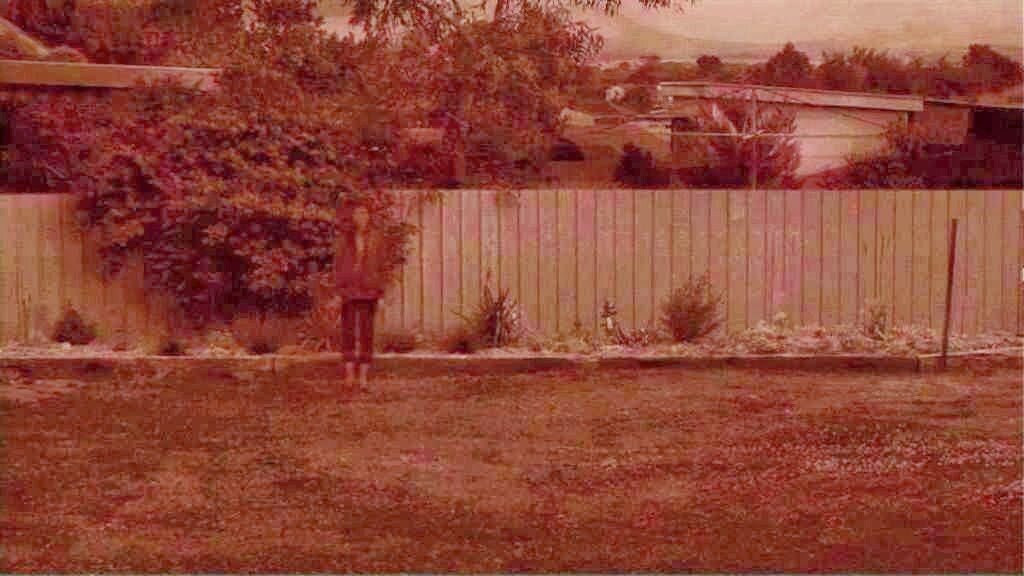
The premise is simple: The Palmers went on a family outing to a river, where Alice disappears. After an extensive search, the authorities find her body caught up in a nearby dam, fairly mangled. The father identifies her, but before they can grieve their loss, the family begins noticing unexpected happenings around their house, and Alice’s face inexplicably begins to appear in photographs that her brother, a budding photographer, takes around the house and in their backyard. It’s all shot in a documentary style, like a true crime movie on Netflix. It’s well-acted and convincingly shot, but at first feels derivative of other, similar, mockumentary/found footage films, until it doesn’t. Fairly quickly, it eschews many of the tired tropes of the genre, and before you know it it’s working its way into your skull through effectively acted storytelling (talking-head style) and well-timed shots of photographs (and eventually footage from home cameras), strategically layered into the narrative at just the right moments to put a pit into your stomach.

One of the remarkable things of Lake Mungo is how effectively it deploys the terror of the unknown human face. It’s common knowledge that humans fear the unknown, but the known can be just as terrifying—when the known becomes twisted, distorted, somehow revealing how mysterious it is—something familiar but wrong. Throughout the movie, we see photographs and short video clips that regularly show us someone who should not be there. While this could feel gimmicky at a certain point, the filmmakers cleverly keep changing the context, and thus what is haunting about each new instance. As the context changes, the tension is heightened throughout the runtime, pulling us along in what is also an incredibly sad and effective story of a tragic and sudden death of a teeanger and how her family copes with her absence.
These grainy images serve as the crux of the horror in this movie, causing us to contemplate blurry images of faces, trying to decipher who it may belong to, why that person would be there, peering at us, the audience. As we examine, we can’t help but be pulled into the image, and as we are pulled into the image, we are pulled into the world of the film and all the horrors it contains. The documentary style of the film can be credited with much of its effectiveness—we are used to talking heads taking us through intense stories. This style is evocative of Found Footage horror movies that work on a similar level: they both tear down a wall of artifice. Sometimes movies will lead with the phrase “Based on a true story,” but that never really works to convince the audience that what they’re seeing is real. The documentary/found footage style can be much more effective when done well, but it can be seen as a lazy shorthand if not. The reason that it works so well here is because the performances are convincing, the style feels familiar enough, and the scares usually feel like a natural byproduct of a macabre and strange story. And the excuses to show creepy images and brief video clips always feels natural in the story.
I’ve always felt like the best horror is akin to the best comedy in they ways that both consist largely of set-up and punchline, and in that comparison, Lake Mungo is built around one major punchline, because each new instance of horror, each new element of the mystery, simply increases the tension as we await the punchline—a payoff that comes in the climax of the movie, and caused me to push myself further back into my seat to get some distance between myself and the screen.
I love it when such an effective horror movie backs up its terror with themes that reinforce what makes the movie so frightening, and Lake Mungo is a minor masterpiece is such an exercise. This is a movie about how little we often know about those around us, how even our closest family members have lives about which we can never know or understand. Everyone you know and love is a mystery. Everyone has the capacity to become a stranger. That is, I think, one of the most frightening things about life—the unknowability of those around us.
Throughout the movie, the Palmer women (mother and grandmother now that Laura is gone) feel guilt at not giving themselves totally over to one another, for reserving a little bit of themselves for themselves. While this does seem like a normal human trait, it also means that they are, on some level, strangers to one another. Alice seems to have taken this to another level (“Alice kept secrets. She kept the fact that she kept secrets a secret,” one of her close friends tells us.), but we all do this to some extent. This movie forces us to consider that, to see everyone around us, our most trusted friends and family, as the strangers that they, on some level, are.
I mentioned Twin Peaks: Fire Walk with Me earlier as one of my touchstone horror movies, and this movie has several elements that put Twin Peaks in my mind for different reasons: the family’s name is Palmer, the popular teenage girl’s dead body found in a body of water, much like Laura Palmer in Twin Peaks. But the most salient reminders were the layers of Alice that revealed themselves only after her death. Her life, like Laura Palmer’s, was a life of keeping up appearances while hiding some very dark secrets. By the end of Twin Peaks, we know Laura pretty well, but Alice remains a mystery. It’s clear that she wanted to speak out, to let her parents know who she was and what she was going through, but as things ramped up and became more unbearable for her, she closed herself off. By the end, she was so clearly painfully alone, and she wanted to be understood but didn’t know how. The movie is largely about her trying to be understood by her loved ones, but by the opening credits it’s much too late. The terror evoked in Lake Mungo stems from seeing the face of a person we know, the face of a likable and charming human being, and seeing it as a stranger, an unknowable mystery that can never be worked out.

 The Turnip Green